Popcorn ceilings went up in a lot of houses between the fifties and the eighties. Spraying texture was fast, and it hid imperfect finishing work underneath. Decades later, they make rooms feel lower and darker, and they collect dust. They're also one of the first things buyers mention.
Removing one looks simple on video. Spray, scrape, done. The scraping genuinely is the easy part. What takes the time is everything around it. That means the testing beforehand and the containment. Then comes the skim coating that turns a scraped ceiling into a finished one.
This walks through what actually happens, in order, so you know what you're agreeing to before a crew shows up. If your house was built before roughly 1980, start with the first section. That one isn't optional, and skipping it is the one mistake that actually matters here.
Test for Asbestos Before Anything Else
Popcorn texture applied before the early eighties may contain asbestos. Not all of it does, and you can't tell by looking at it. The only way to know is a lab test on a sample.
Testing is inexpensive and fast, and it's the right first step in any older Massachusetts home. Take a small sample from an inconspicuous spot, or have someone take it, and send it to a certified lab.
If it comes back positive, the removal is not a drywall job anymore. It goes to a licensed asbestos abatement contractor, and that's a different trade with different equipment and different regulations. We don't do that work, and neither should any drywall crew that offers to.
The scraping genuinely is the easy part. What takes the time is everything around it — the testing, the containment, and the skim coating that turns a scraped ceiling into a finished one.
What the Prep Actually Involves
This is the part people underestimate. Scraping a ceiling drops wet texture over everything in the room, and it travels further than you'd expect.
Furniture comes out or gets moved to the center and wrapped. Floors get covered, and the covering gets taped down at the edges rather than just laid over. Doorways get sealed with plastic. Vents get covered, because otherwise the dust goes into the ductwork and comes back out in every other room.
Light fixtures come down or get bagged. Ceiling fans come down. If the room has a carpet, leave the floor covering down longer. It stays until the skim coating and the sanding are finished, not just the scraping.
Scraping, Skimming, and the Mess
The texture gets misted with water and left to soften, then scraped off with a wide blade. Painted popcorn is harder and slower, because paint seals the texture and stops it from absorbing water.
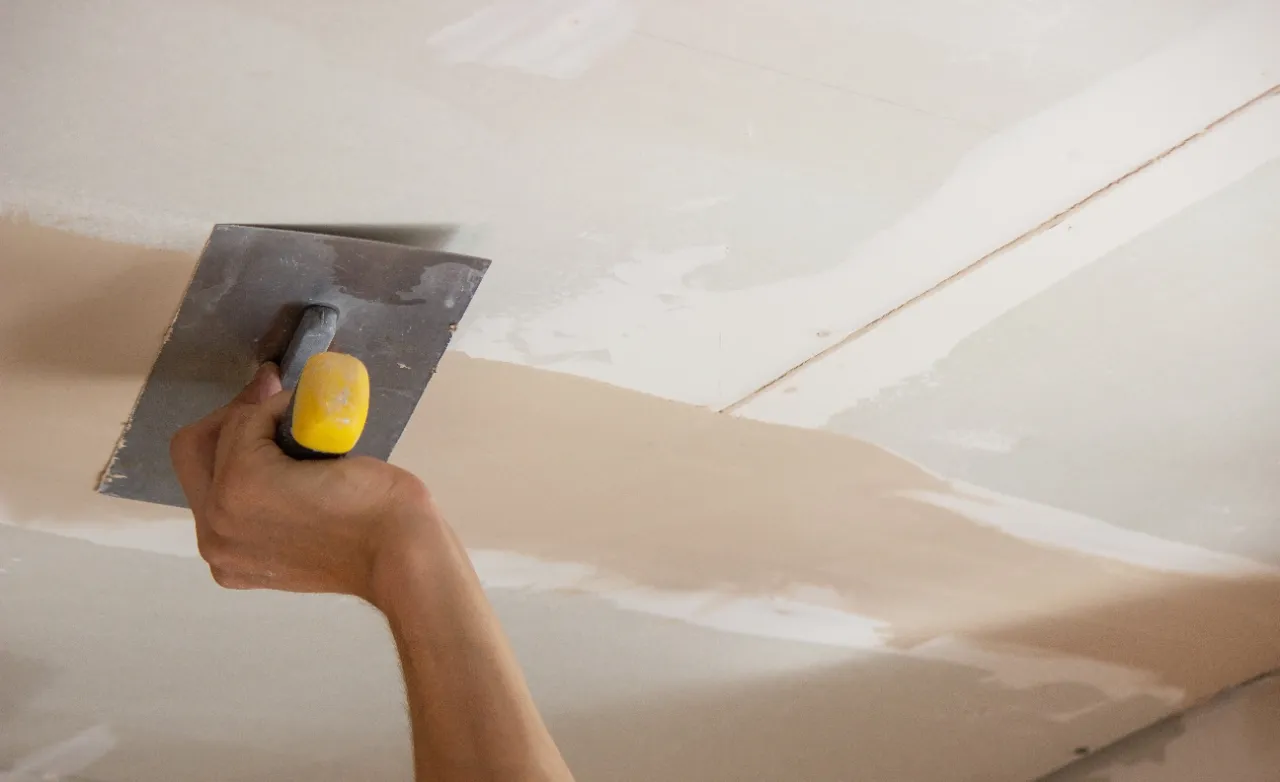
Once it's off, you're looking at bare ceiling with the old seams and screw lines exposed. That's the halfway point, not the finish. The ceiling then gets a skim coat, or several, and sanding between them.
This is where the real dust comes from. Compound sanding produces a fine dust that hangs in the air and settles everywhere. That's why containment matters more than a broom at the end. After skimming, the ceiling gets primed, then painted or retextured. Our ceiling services handle the full process from scrape to primer.
How Long It Takes and What Comes After
A single average bedroom is usually two to three days, and most of that is drying time between compound coats. Compound doesn't cure faster because you'd like it to. A whole floor of a house takes proportionally longer.
Plan on not using the room during that window. Plan on the rest of the house being livable, if the containment was done properly.
Afterward, most people paint the ceiling flat white. Flat is the standard because it hides more than any sheen with gloss in it. Some people retexture with a light knockdown instead. And decide on your ceiling before you repaint the walls. A scraped ceiling almost always means touching up the top of the wall too.